
AP U.S. History Pathway
Unlike AP U.S. Government and Politics, AP U.S. History does not prescribe a set of required primary-source documents. Teachers have flexibility to select primary sources appropriate to the course.
The College Board emphasizes regular analysis of primary sources as students develop the historical thinking skills assessed in AP U.S. History—including analyzing a source's point of view, purpose, historical situation, audience, claims, and evidence, and using historical evidence to develop and support arguments.
The Waypoints Library provides primary sources from across U.S. history that teachers can use to supplement course materials and give students sustained practice with these skills.
Waypoints Library
Primary source documents that shaped America's ideas and institutions.
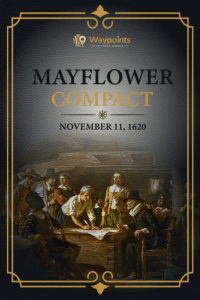
Mayflower Compact (1620)
Primary Source Author
11 November 1620
Before establishing their new settlement, the Mayflower’s passengers faced a fundamental question: how would they govern themselves? Their answer was a remarkable agreement to form a political community and create laws for the common good—an early American expression of self-government, consent, and the responsibilities of living together under law.
💡 KEY IDEAS IN THIS DOCUMENT
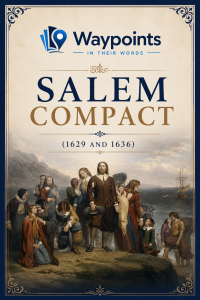
Salem Covenant (1629/1636)
Primary Source Author
1629
What holds a community together? In 1629, members of the Salem church answered with a covenant—promising to walk together according to God’s word. Their brief agreement reveals how Puritan ideas about faith, mutual responsibility, and communal obligation shaped the religious communities taking root in early New England.
💡 KEY IDEAS IN THIS DOCUMENT
Thomas Jefferson, A Summary View of the Rights of British America (1774)
Thomas Jefferson • July 1774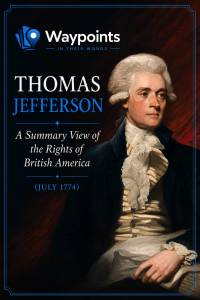
Thomas Jefferson, A Summary View of the Rights of British America (1774)
Thomas Jefferson
July 1774
Two years before the Declaration of Independence, Thomas Jefferson was already challenging the foundations of British authority in America. He argues that the colonists possess inherent rights, questions Parliament’s power over them, and confronts the king with a provocative vision of a people entitled to govern themselves.
💡 KEY IDEAS IN THIS DOCUMENT
Patrick Henry, Give Me Liberty or Give Me Death Speech (1775)
Patrick Henry • 23 March 1775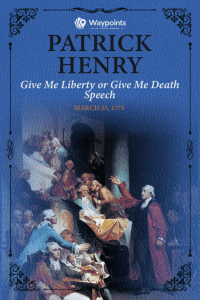
Patrick Henry, Give Me Liberty or Give Me Death Speech (1775)
Patrick Henry
23 March 1775
On the eve of the American Revolution, Patrick Henry confronts a defining question: how long should a people pursue peace when they believe their liberty is threatened? His powerful address challenges Virginia’s leaders to choose between continued submission and resistance, culminating in one of the Revolution’s most memorable declarations.
💡 KEY IDEAS IN THIS DOCUMENT
Thomas Paine, Common Sense (1776)
Thomas Paine • 14 February 1776
Thomas Paine, Common Sense (1776)
Thomas Paine
14 February 1776
Why should America remain tied to a distant king? Thomas Paine’s Common Sense transformed the debate over Britain from a dispute about rights into a powerful case for independence. Written for ordinary readers, Paine challenges monarchy, dismantles arguments for reconciliation, and urges Americans to imagine a nation of their own.
💡 KEY IDEAS IN THIS DOCUMENT
Samuel West, “On the Right to Rebel Against Governors” (1776)
Samuel West • 29 May 1776
Samuel West, “On the Right to Rebel Against Governors” (1776)
Samuel West
29 May 1776
When does resistance to government become justified? Preaching in revolutionary Massachusetts, Samuel West argues that political authority has limits—and that rulers who violate the rights of the people can forfeit their claim to obedience. His sermon explores the striking intersection of faith, natural rights, government, and revolution.
💡 KEY IDEAS IN THIS DOCUMENT
Richard Henry Lee, Resolution for Independence (1776)
Richard Henry Lee • 7 June 1776
Richard Henry Lee, Resolution for Independence (1776)
Richard Henry Lee
7 June 1776
Before the Declaration came the resolution that forced the question: should the colonies become independent? Richard Henry Lee’s brief proposal called for the colonies to be “free and independent States,” setting Congress on the path toward its historic vote and transforming the debate over independence into a decision.
💡 KEY IDEAS IN THIS DOCUMENT
Declaration of Independence (1776)
Primary Source Author • 4 July 1776
Declaration of Independence (1776)
Primary Source Author
4 July 1776
What makes a government legitimate—and when may a people overthrow it? The Declaration announces American independence while making a sweeping argument about equality, natural rights, consent, and the purpose of government. Its principles would shape the new nation while raising questions Americans continue to debate today.
💡 KEY IDEAS IN THIS DOCUMENT
📁 WHY IT MATTERS FOR AP GOV
Essential primary source for understanding the republican government, the union of the states, separation of powers, federalism, and the arguments for ratification.
Articles of Confederation (1777)
Primary Source Author • 15 November 1777
Articles of Confederation (1777)
Primary Source Author
15 November 1777
How do thirteen newly independent states become one nation without surrendering too much power? America’s first national framework created a union built around strong states and a limited central government. Its structure reveals the Revolution’s deep distrust of centralized authority—and the challenges of turning independence into workable government.
💡 KEY IDEAS IN THIS DOCUMENT
📁 WHY IT MATTERS FOR AP GOV
Essential primary source for understanding the republican government, the union of the states, separation of powers, federalism, and the arguments for ratification.
James Madison, “Memorial & Remonstrance Against Religious Assessments” (1785)
James Madison • 20 June 1785
James Madison, “Memorial & Remonstrance Against Religious Assessments” (1785)
James Madison
20 June 1785
Should government ever support religion with public money? James Madison argues that religious belief lies beyond the authority of government and must remain a matter of individual conscience. His powerful defense of religious liberty explores the boundaries between faith and political power—and helped shape America’s approach to religious freedom.
💡 KEY IDEAS IN THIS DOCUMENT
Thomas Jefferson, A Bill for Establishing Religious Freedom (1777/1786)
Thomas Jefferson • 1777
Thomas Jefferson, A Bill for Establishing Religious Freedom (1777/1786)
Thomas Jefferson
1777
Can government compel belief—or punish someone for believing differently? Thomas Jefferson’s landmark bill rejects government control over religious faith and protects the freedom to believe, speak, and reason according to one’s conscience. Its principles became a foundation for American religious liberty and the separation of religious belief from government authority.
💡 KEY IDEAS IN THIS DOCUMENT
Thomas Jefferson, Rough Draft of the Declaration of Independence (1776)
Thomas Jefferson • 12 June 1776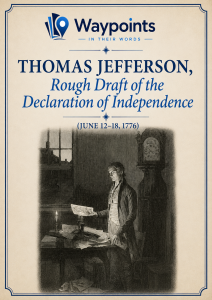
Thomas Jefferson, Rough Draft of the Declaration of Independence (1776)
Thomas Jefferson
12 June 1776
What changed before the Declaration became the document Americans know today? Jefferson’s rough draft reveals ideas, accusations, and language that Congress revised or removed—including a striking passage condemning the slave trade. Comparing draft and final versions opens a window into the choices and compromises behind America’s founding statement.
💡 KEY IDEAS IN THIS DOCUMENT
George Washington, Letter to Morris (1786)
George Washington • 12 April 1786
George Washington, Letter to Morris (1786)
George Washington
12 April 1786
What happens when a revolution wins independence but leaves the nation struggling to govern itself? Writing to Gouverneur Morris, George Washington voices his growing concern about America’s political weakness under the Articles of Confederation. His letter captures the mounting frustrations that would soon propel the nation toward the Constitutional Convention.
💡 KEY IDEAS IN THIS DOCUMENT
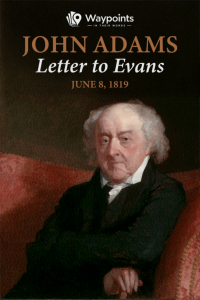
John Adams, Letter to Evans (1819)
John Adams
8 June 1819
What ideas truly drove the American Revolution? Looking back more than forty years later, John Adams argues that the Revolution began in the minds of the people before fighting ever started. His letter challenges readers to consider the beliefs, principles, and changing attitudes that made independence possible.
💡 KEY IDEAS IN THIS DOCUMENT
Alexander Hamilton, Philo Camillus no. 2 (1795)
Alexander Hamilton • 7 August 1795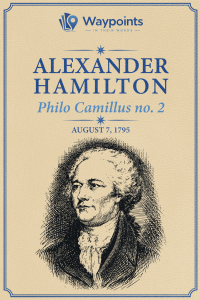
Alexander Hamilton, Philo Camillus no. 2 (1795)
Alexander Hamilton
7 August 1795
What does it take for a free government to survive disagreement? Writing amid fierce controversy over the Jay Treaty, Alexander Hamilton examines the relationship between public opinion, constitutional authority, and political responsibility. His argument asks citizens to distinguish principled opposition from passions that can threaten stable republican government.
💡 KEY IDEAS IN THIS DOCUMENT
James Madison, Speech at Constitutional Convention (June 6, 1787)
James Madison • 6 June 1787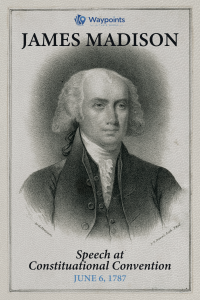
James Madison, Speech at Constitutional Convention (June 6, 1787)
James Madison
6 June 1787
What poses the greatest danger to a republic? At the Constitutional Convention, James Madison confronts the problem of factions, competing interests, and majority power. His remarks reveal the concerns shaping the new Constitution—and his search for a government capable of protecting liberty while controlling the forces that could undermine it.
💡 KEY IDEAS IN THIS DOCUMENT
James Madison, Speech at Constitutional Convention (August 25, 1787)
James Madison • 25 August 1787
James Madison, Speech at Constitutional Convention (August 25, 1787)
James Madison
25 August 1787
Could the new Constitution permit the nation to end the slave trade? As delegates debated the future of slavery, James Madison addressed Congress’s power over the importation of enslaved people. His remarks expose one of the Convention’s most consequential conflicts—and the compromises embedded in America’s new constitutional framework.
💡 KEY IDEAS IN THIS DOCUMENT
Thomas Jefferson, Notes on the State of Virginia, Query XIV (1781)
Thomas Jefferson • 1781
Thomas Jefferson, Notes on the State of Virginia, Query XIV (1781)
Thomas Jefferson
1781
How could a nation proclaim liberty while permitting slavery? In Notes on the State of Virginia, Thomas Jefferson confronts slavery while also expressing deeply racist assumptions about Black Americans. The result exposes profound contradictions between his ideas about natural rights, his views on race, and the realities of American slavery.
💡 KEY IDEAS IN THIS DOCUMENT
Thomas Jefferson, Notes on the State of Virginia, Query VXIII (1781)
Thomas Jefferson • 1781
Thomas Jefferson, Notes on the State of Virginia, Query VXIII (1781)
Thomas Jefferson
1781
What happens to liberty when people become accustomed to holding power over others? Thomas Jefferson examines slavery’s effects on both enslaved people and enslavers, warning of its moral and political consequences. His reflections reveal the profound tension between slavery and the principles of liberty at the heart of the American experiment.
💡 KEY IDEAS IN THIS DOCUMENT
Thomas Jefferson, Letter to Henri Gregoire (1809)
Thomas Jefferson • 25 February 1809
Thomas Jefferson, Letter to Henri Gregoire (1809)
Thomas Jefferson
25 February 1809
Could achievement overturn deeply rooted assumptions about race? Writing to Henri Grégoire, Thomas Jefferson responds to evidence of Black intellectual accomplishment while refusing to abandon his own racial prejudices. The letter offers a revealing look at Jefferson’s thinking—and the conflict between Enlightenment ideals, claims about human equality, and racial hierarchy.
💡 KEY IDEAS IN THIS DOCUMENT
Northwest Ordinance (1787)
Primary Source Author
13 July 1787
How would a growing nation govern new territory—and turn it into states? The Northwest Ordinance created a framework for western expansion, territorial government, and eventual statehood while addressing education, individual rights, and slavery. Its provisions helped establish principles that would shape America’s growth far beyond the original thirteen states.
💡 KEY IDEAS IN THIS DOCUMENT
James Madison, “Property” (1792)
James Madison
29 March 1792
What does it really mean to have property? James Madison reaches far beyond land and possessions, arguing that people also have property in their rights, beliefs, opinions, and personal faculties. His essay challenges readers to consider government’s responsibility to protect both material possessions and the freedoms that belong to every individual.
💡 KEY IDEAS IN THIS DOCUMENT
United States Constitution (1787)
Primary Source Author • 17 September 1787
United States Constitution (1787)
Primary Source Author
17 September 1787
How can a government be powerful enough to govern yet limited enough to preserve liberty? The Constitution confronts that challenge through federalism, separated powers, checks and balances, and representative government. Its framework has endured for centuries while continuing to shape debates over power, rights, and the meaning of self-government.
💡 KEY IDEAS IN THIS DOCUMENT
📁 WHY IT MATTERS FOR AP GOV
Essential primary source for understanding the republican government, the union of the states, separation of powers, federalism, and the arguments for ratification.
Thomas Jefferson, Letter to James Madison (February 1, 1825)
Thomas Jefferson • 1 February 1825
Thomas Jefferson, Letter to James Madison (February 1, 1825)
Thomas Jefferson
1 February 1825
What must Americans learn to preserve their freedom? Near the end of his life, Thomas Jefferson writes to James Madison about education, self-government, and the future of republican liberty. His letter reveals Jefferson’s enduring belief that an informed people—and institutions devoted to educating them—were essential to sustaining a free society.
💡 KEY IDEAS IN THIS DOCUMENT
James Madison, Letter responding to Thomas Jefferson (February 8, 1825)
James Madison • 8 February 1825
James Madison, Letter responding to Thomas Jefferson (February 8, 1825)
James Madison
8 February 1825
How should a free society pass its principles from one generation to the next? Responding to Thomas Jefferson, James Madison reflects on education, knowledge, and republican government. Their exchange offers a remarkable glimpse into two aging Founders considering what would be required to preserve liberty long after their own generation was gone.
💡 KEY IDEAS IN THIS DOCUMENT
The Federalist Papers (1788)
Primary Source Author • 1787–1788
The Federalist Papers (1788)
Primary Source Author
1787–1788
How would the proposed Constitution actually work—and why should Americans trust it? Writing as “Publius,” Alexander Hamilton, James Madison, and John Jay defend the new Constitution while examining federalism, factions, separated powers, representation, and the branches of government. Their 85 essays illuminate the reasoning behind America’s new constitutional system.
💡 KEY IDEAS IN THIS DOCUMENT
AP U.S. GOVERNMENT — 5 REQUIRED FOUNDATIONAL DOCUMENTS INCLUDED
The College Board requires Federalist Nos. 10, 39, 51, 70, and 78 for AP U.S. Government. All five are included here within Waypoints’ complete edition of The Federalist Papers, which contains all 85 of the original Federalist essays.
George Washington, “Rules of Civility” (c. 1748)
George Washington • 1748
George Washington, “Rules of Civility” (c. 1748)
George Washington
1748
What can a teenager’s copybook reveal about the making of a leader? Around age fourteen, George Washington copied 110 rules governing character, manners, and conduct. Though he did not write these maxims, the exercise offers a fascinating glimpse into the moral and social expectations that helped shape the young Washington.
💡 KEY IDEAS IN THIS DOCUMENT
George Washington, First Inaugural Address (1789)
George Washington • 30 April 1789
George Washington, First Inaugural Address (1789)
George Washington
30 April 1789
How does the first president define an office with no precedent? George Washington begins the presidency with humility, emphasizing duty, constitutional government, and the responsibilities of republican leadership. His address reveals a president carefully setting a tone for an entirely new office—and establishing a tradition that continues today.
💡 KEY IDEAS IN THIS DOCUMENT
George Washington, Letter to the Hebrew Congregation at Newport (1790)
George Washington • 18 August 1790
George Washington, Letter to the Hebrew Congregation at Newport (1790)
George Washington
18 August 1790
Is religious liberty merely tolerance—or an inherent right of every citizen? Writing to Newport’s Jewish congregation, George Washington declares that Americans possess liberty of conscience and equal citizenship. His letter offers a powerful statement about religious freedom, rejecting bigotry and persecution as incompatible with the principles of the new nation.
💡 KEY IDEAS IN THIS DOCUMENT
George Washington, Farewell Address (1796)
George Washington • 17 September 1796
George Washington, Farewell Address (1796)
George Washington
17 September 1796
What advice would America’s first president leave for future generations? As George Washington prepares to retire, he reflects on what could preserve—or endanger—the young republic. His Farewell Address challenges Americans to consider national unity, political factions, constitutional government, civic virtue, public debt, and the nation’s relationships abroad.
💡 KEY IDEAS IN THIS DOCUMENT
Thomas Jefferson, Kentucky Resolutions (1798)
Thomas Jefferson • 10 November 1798
Thomas Jefferson, Kentucky Resolutions (1798)
Thomas Jefferson
10 November 1798
Who decides when the federal government has exceeded its constitutional powers? Secretly drafted by Thomas Jefferson in response to the Alien and Sedition Acts, the Kentucky Resolutions challenge federal authority and assert a role for the states in judging constitutionality—opening a consequential debate over federalism, power, and constitutional limits.
💡 KEY IDEAS IN THIS DOCUMENT
Thomas Jefferson, First Inaugural Address (1801)
Thomas Jefferson • 4 March 1801
Thomas Jefferson, First Inaugural Address (1801)
Thomas Jefferson
4 March 1801
Can a nation remain united after a bitter political contest? Taking office after the divisive election of 1800, Thomas Jefferson calls Americans back to shared republican principles. His address explores political disagreement, majority rule, constitutional government, and liberty while asking whether partisan opponents can remain fellow citizens in a self-governing republic.
💡 KEY IDEAS IN THIS DOCUMENT
Marbury v. Madison, 5 U.S. 137 (1803)
Primary Source Author • 24 February 1803
Marbury v. Madison, 5 U.S. 137 (1803)
Primary Source Author
24 February 1803
What happens when an individual has a legal right—but the Supreme Court cannot provide the requested remedy? Marbury v. Madison turns a dispute over an undelivered commission into a defining constitutional question, establishing judicial review and affirming the judiciary’s role in determining whether federal laws conflict with the Constitution.
💡 KEY IDEAS IN THIS DOCUMENT
Missouri Compromise (1820)
Primary Source Author
6 March 1820
Could Congress contain the growing conflict over slavery’s westward expansion? The Missouri Compromise attempted to do so by balancing Missouri and Maine while drawing a geographic boundary for slavery in the Louisiana Purchase. The settlement reveals how Congress confronted a sectional conflict that compromise could quiet—but not resolve.
💡 KEY IDEAS IN THIS DOCUMENT
Congressional Globe, Speech Re: the Tallmadge Amendment (1819)
James Tallmadge Jr. • 15 February 1819
Congressional Globe, Speech Re: the Tallmadge Amendment (1819)
James Tallmadge Jr.
15 February 1819
Could Congress stop slavery from expanding westward? As Missouri sought statehood, James Tallmadge defended an amendment prohibiting the further introduction of enslaved people and providing eventual freedom for children born into slavery there. His speech brings an emerging national conflict over slavery, congressional power, and western expansion directly into Congress.
💡 KEY IDEAS IN THIS DOCUMENT
Thomas Jefferson, Letter to John Holmes (1820)
Thomas Jefferson • 22 April 1820
Thomas Jefferson, Letter to John Holmes (1820)
Thomas Jefferson
22 April 1820
The Missouri crisis deeply alarmed an aging Thomas Jefferson. Describing the controversy as a “fire bell in the night,” he feared that conflict over slavery and its expansion had exposed a dangerous sectional divide. This remarkable private letter captures Jefferson contemplating whether the unresolved issue could ultimately tear the Union apart.
💡 KEY IDEAS IN THIS DOCUMENT
South Carolina, Ordinance of Nullification (1832)
Primary Source Author • 24 November 1832
South Carolina, Ordinance of Nullification (1832)
Primary Source Author
24 November 1832
In 1832, South Carolina directly challenged federal authority. Acting through a state convention, it declared the federal tariffs of 1828 and 1832 unconstitutional, “null” and “void” within the state. The Ordinance brings a fundamental constitutional conflict into sharp focus: who ultimately decides the limits of federal and state power?
💡 KEY IDEAS IN THIS DOCUMENT
Andrew Jackson, Proclamation Re: South Carolina (1832)
Andrew Jackson • 10 December 1832
Andrew Jackson, Proclamation Re: South Carolina (1832)
Andrew Jackson
10 December 1832
South Carolina’s nullification challenge drew an uncompromising response from President Andrew Jackson. Rejecting the idea that a state could remain in the Union while choosing which federal laws to obey, Jackson defended federal supremacy, constitutional government, and a perpetual Union—and warned of the consequences of resisting federal law by force.
💡 KEY IDEAS IN THIS DOCUMENT
Force Bill (1833)
Primary Source Author
2 March 1833
The nullification crisis moved from constitutional argument to the question of enforcement. The Force Bill gave the federal government expanded authority to collect tariff duties despite South Carolina’s resistance. Read alongside Jackson’s Proclamation, it reveals how Congress translated claims of federal supremacy into practical power during a confrontation over the Union.
💡 KEY IDEAS IN THIS DOCUMENT
John C. Calhoun, Tariff Speech (1816)
John C. Calhoun • 4 April 1816
John C. Calhoun, Tariff Speech (1816)
John C. Calhoun
4 April 1816
Before John C. Calhoun became a leading critic of protective tariffs and champion of state resistance, he argued for federal protection of American manufacturing. His 1816 speech presents tariffs as a means of strengthening national defense, prosperity, and unity—offering a revealing contrast with the constitutional positions he would later embrace.
💡 KEY IDEAS IN THIS DOCUMENT
John C. Calhoun, “Exposition & Protest” (1828)
John C. Calhoun • 19 December 1828
John C. Calhoun, “Exposition & Protest” (1828)
John C. Calhoun
19 December 1828
A decade before the Nullification Crisis, John C. Calhoun laid the intellectual groundwork for state resistance to federal power. His Exposition & Protest attacks the protective tariff as unconstitutional, unequal, and oppressive while developing a theory of state interposition that would soon place South Carolina in direct conflict with the federal government.
💡 KEY IDEAS IN THIS DOCUMENT
William Lloyd Garrison, “To the Public” (1831)
William Llyod Garrison • 1 January 1831
William Lloyd Garrison, “To the Public” (1831)
William Llyod Garrison
1 January 1831
With the first issue of The Liberator, William Lloyd Garrison announced an uncompromising campaign against slavery. Rejecting gradual abolition, he demanded immediate emancipation and grounded his cause in the Declaration’s principles of equality and natural rights. His defiant declaration—“I will be heard”—helped define a new era of American abolitionism.
💡 KEY IDEAS IN THIS DOCUMENT
Frederick Douglass, What to the Slave is the 4th of July? Speech (1852)
Frederick Douglass • 5 July 1852
Frederick Douglass, What to the Slave is the 4th of July? Speech (1852)
Frederick Douglass
5 July 1852
Frederick Douglass transforms a celebration of American independence into a powerful confrontation with the nation’s contradictions. Praising the Founders and their principles of liberty, he asks what those ideals mean while millions remain enslaved. His answer challenges America’s politics, churches, and citizens—yet ultimately looks toward slavery’s end.
💡 KEY IDEAS IN THIS DOCUMENT
Abraham Lincoln, Announcement of Political Views (1836)
Abraham Lincoln • 13 June 1836
Abraham Lincoln, Announcement of Political Views (1836)
Abraham Lincoln
13 June 1836
Long before the presidency, a young Abraham Lincoln was already wrestling with the responsibilities of representative government. Announcing his political views to Illinois voters in 1836, Lincoln addresses public opinion, legislative judgment, and voting rights—offering an early glimpse of ideas about citizenship and self-government that would remain central to his political life.
💡 KEY IDEAS IN THIS DOCUMENT
Abraham Lincoln, Protest on the Slavery Question (1837)
Abraham Lincoln • 3 March 1837
Abraham Lincoln, Protest on the Slavery Question (1837)
Abraham Lincoln
3 March 1837
In just a few sentences, a 28-year-old Abraham Lincoln made his earliest recorded public statement against slavery. While rejecting abolitionist methods and recognizing constitutional limits on federal power, Lincoln and fellow legislator Dan Stone declared slavery founded on “injustice and bad policy”—an early marker in Lincoln’s evolving views on slavery.
💡 KEY IDEAS IN THIS DOCUMENT
Abraham Lincoln, Lyceum Address (1838)
Abraham Lincoln • 27 January 1838
Abraham Lincoln, Lyceum Address (1838)
Abraham Lincoln
27 January 1838
At just twenty-eight, Abraham Lincoln asked what could destroy American self-government. His answer was not a foreign enemy, but dangers arising from within: mob violence, disregard for law, and unchecked ambition. The Lyceum Address reveals a young Lincoln thinking deeply about law, civic responsibility, and the preservation of free institutions.
💡 KEY IDEAS IN THIS DOCUMENT
Abraham Lincoln, Temperance Address (1842)
Abraham Lincoln • 22 February 1842
Abraham Lincoln, Temperance Address (1842)
Abraham Lincoln
22 February 1842
Speaking to a temperance society in 1842, Abraham Lincoln argued that moral reform succeeds through persuasion rather than condemnation. Instead of treating those struggling with alcohol as morally inferior, he emphasized sympathy, reason, and encouragement. The address offers an revealing early look at Lincoln’s thinking about human nature and lasting social change.
💡 KEY IDEAS IN THIS DOCUMENT
1854 Kansas-Nebraska Act
Primary Source Author
30 May 1854
The Kansas-Nebraska Act reopened a question the Missouri Compromise had attempted to settle: where could slavery expand? By allowing settlers in Kansas and Nebraska to decide the issue through popular sovereignty, the law overturned the earlier geographic restriction on slavery—intensifying sectional conflict and helping ignite the violence known as “Bleeding Kansas.”
💡 KEY IDEAS IN THIS DOCUMENT
Abraham Lincoln, Speech on the Kansas-Nebraska Act (1854)
Abraham Lincoln • 16 October 1854
Abraham Lincoln, Speech on the Kansas-Nebraska Act (1854)
Abraham Lincoln
16 October 1854
The Kansas-Nebraska Act brought Abraham Lincoln back into the national debate over slavery. At Peoria, he argued against repealing the Missouri Compromise and allowing slavery to expand westward, grounding his case in the Declaration of Independence. The speech reveals Lincoln developing arguments about slavery, equality, self-government, and the nation’s founding principles.
💡 KEY IDEAS IN THIS DOCUMENT
Abraham Lincoln, Fragments on Slavery (c.1854)
Abraham Lincoln • 1 July 1854
Abraham Lincoln, Fragments on Slavery (c.1854)
Abraham Lincoln
1 July 1854
In these private fragments, Abraham Lincoln works through the moral logic of slavery in strikingly direct terms. If slavery is not wrong, he reasons, nothing is wrong. His notes expose the contradiction between denying liberty to others and claiming it for oneself—ideas that would soon emerge more fully in his public arguments against slavery’s expansion.
💡 KEY IDEAS IN THIS DOCUMENT
Dred Scott v. Sandford, 60 U.S. 393 (1857)
Primary Source Author • 6 March 1857
Dred Scott v. Sandford, 60 U.S. 393 (1857)
Primary Source Author
6 March 1857
Dred Scott’s fight for freedom became the basis for a sweeping Supreme Court ruling on slavery, citizenship, and federal power. The Court denied Scott’s claim, excluded Black Americans descended from enslaved people from federal citizenship, and declared Congress powerless to prohibit slavery in the territories—striking down the Missouri Compromise restriction.
💡 KEY IDEAS IN THIS DOCUMENT
Defense speech in the Jacob Gruber case
Primary Source Author • March 1819
Defense speech in the Jacob Gruber case
Primary Source Author
March 1819
💡 KEY IDEAS IN THIS DOCUMENT
1856 Presidential Election results
Primary Source Author
1856
The election of 1856 revealed a nation increasingly divided along sectional lines. Democrat James Buchanan defeated Republican John C. Frémont and American Party candidate Millard Fillmore, but the state-by-state results tell a larger story: the new Republican Party drew substantial Northern support while finding virtually none across the slaveholding South.
💡 KEY IDEAS IN THIS DOCUMENT
Abraham Lincoln, Speech on the Dred Scott Case (1857)
Abraham Lincoln • 26 June 1857
Abraham Lincoln, Speech on the Dred Scott Case (1857)
Abraham Lincoln
26 June 1857
Abraham Lincoln answered the Dred Scott decision by challenging its implications for slavery, citizenship, and equality. While acknowledging the Supreme Court’s authority in individual cases, he rejected the idea that its ruling should permanently settle national policy and defended the Declaration of Independence as embracing Black Americans within its promise of equality.
💡 KEY IDEAS IN THIS DOCUMENT
Abraham Lincoln, Letter to Henry L. Pierce & Others (1859)
Abraham Lincoln • 6 April 1859
Abraham Lincoln, Letter to Henry L. Pierce & Others (1859)
Abraham Lincoln
6 April 1859
Invited to honor Thomas Jefferson, Abraham Lincoln instead sent a letter explaining why Jefferson’s principles still mattered. He identified the Declaration of Independence as the source of a timeless moral truth: that liberty and equality belong to all people. The letter reveals how deeply Lincoln connected America’s founding principles to the struggle over slavery.
💡 KEY IDEAS IN THIS DOCUMENT
Abraham Lincoln, House Divided Speech (1858)
Abraham Lincoln • 16 June 1858
Abraham Lincoln, House Divided Speech (1858)
Abraham Lincoln
16 June 1858
“A house divided against itself cannot stand.” With that warning, Abraham Lincoln argued that the nation could not remain permanently divided between slavery and freedom. Connecting the Kansas-Nebraska Act and Dred Scott decision, he warned that slavery might become lawful nationwide and framed its expansion as a defining crisis for American self-government.
💡 KEY IDEAS IN THIS DOCUMENT
Abraham Lincoln, Electric Cord Speech (1858)
Abraham Lincoln • 10 July 1858
Abraham Lincoln, Electric Cord Speech (1858)
Abraham Lincoln
10 July 1858
What binds Americans together when they do not share a common ancestry? Abraham Lincoln found the answer in the Declaration of Independence. Its principle that “all men are created equal,” he argued, forms an “electric cord” connecting Americans across generations and backgrounds—a shared commitment central to his argument against slavery’s expansion.
💡 KEY IDEAS IN THIS DOCUMENT
The Lincoln-Douglas Debates (1858)
Abraham Lincoln • 21 August 1858 - 15 October 1858
The Lincoln-Douglas Debates (1858)
Abraham Lincoln
21 August 1858 - 15 October 1858
Across seven Illinois debates, Abraham Lincoln and Stephen A. Douglas confronted the question dominating American politics: the future of slavery. Their exchanges tested competing arguments about popular sovereignty, the Dred Scott decision, equality, and slavery’s expansion, revealing how a Senate campaign became a national debate over the meaning and future of American self-government.
💡 KEY IDEAS IN THIS DOCUMENT
John C. Calhoun, Speech on Reception of Abolition Petitions (1837)
John C. Calhoun • 6 February 1837
John C. Calhoun, Speech on Reception of Abolition Petitions (1837)
John C. Calhoun
6 February 1837
What begins as a Senate dispute over abolition petitions becomes John C. Calhoun’s sweeping defense of slavery. Rejecting the claim that slavery was merely a necessary evil, Calhoun declared it a “positive good” and connected its preservation to constitutional power, sectional security, and the survival of the Union.
💡 KEY IDEAS IN THIS DOCUMENT
John C. Calhoun, Speech on the Oregon Bill (1848)
John C. Calhoun • 27 June 1848
John C. Calhoun, Speech on the Oregon Bill (1848)
John C. Calhoun
27 June 1848
Debate over governing Oregon became part of a much larger struggle over slavery’s expansion. John C. Calhoun argued that Congress could not exclude enslavers and enslaved people from federal territories, framing the issue around constitutional power and sectional equality. His speech also directly challenges the Founding-era principle that human beings are naturally equal.
💡 KEY IDEAS IN THIS DOCUMENT
John C. Calhoun, “Disquisition on Government” (1851)
John C. Calhoun • 1851
John C. Calhoun, “Disquisition on Government” (1851)
John C. Calhoun
1851
What prevents a majority from using political power against a minority? In A Disquisition on Government, John C. Calhoun argues that majority rule alone cannot secure liberty. His theory of the “concurrent majority” seeks to protect distinct interests by requiring broader consent—presenting his mature argument about power, constitutional government, and political conflict.
💡 KEY IDEAS IN THIS DOCUMENT
Alexander Stephens, Cornerstone Speech (1861)
Alexander Stephens • 1861
Alexander Stephens, Cornerstone Speech (1861)
Alexander Stephens
1861
Weeks before the Civil War began, Confederate Vice President Alexander Stephens publicly explained what he believed distinguished the new Confederacy from the United States. Rejecting the Declaration’s principle of human equality, he declared racial inequality and slavery foundational to the Confederate system—making the speech a revealing statement of Confederate political ideology in 1861.
💡 KEY IDEAS IN THIS DOCUMENT
James Henley Thornwell, ”Southern Christian View of Slavery” (1861)
James Henley Thornwell • 31 December 1861
James Henley Thornwell, ”Southern Christian View of Slavery” (1861)
James Henley Thornwell
31 December 1861
As the Union fractured, Presbyterian theologian James Henley Thornwell offered a religious and constitutional defense of Southern slavery. He argued that slaveholding was compatible with Christianity and that the federal government should remain neutral toward the institution. His writing reveals how theological arguments were used to defend slavery and Southern political claims in 1861.
💡 KEY IDEAS IN THIS DOCUMENT
Rev. Fred A. Ross, D.D., Slavery Ordained of God (1857)
Rev. Fred A. Ross D.D. • 1787–1788
Rev. Fred A. Ross, D.D., Slavery Ordained of God (1857)
Rev. Fred A. Ross D.D.
1787–1788
Could Christianity be used to justify slavery? Presbyterian minister Frederick A. Ross argued that the Bible sanctioned slaveholding and that abolitionists wrongly treated slavery itself as sinful. His 1857 work offers a revealing example of the religious arguments used to defend slavery—and the theological conflict surrounding the institution before the Civil War.
💡 KEY IDEAS IN THIS DOCUMENT
Abraham Lincoln, Fragment on Ross and Pro-Slavery Theology (1858)
Abraham Lincoln • 1 October 1858
Abraham Lincoln, Fragment on Ross and Pro-Slavery Theology (1858)
Abraham Lincoln
1 October 1858
Can the Bible justify slavery simply because it does not explicitly forbid it? In this unfinished fragment, Abraham Lincoln challenges a proslavery theological argument by turning its logic against itself. His notes reveal Lincoln grappling with the relationship between religious reasoning, morality, and slavery during the heated debates of the 1850s.
💡 KEY IDEAS IN THIS DOCUMENT
Four Party Platforms (1860)
Primary Source Author
1860
The election of 1860 exposed deep fractures in American politics. The Republican, Northern Democratic, Southern Democratic, and Constitutional Union platforms offered competing positions on slavery, federal power, territorial expansion, and the Union. Read together, they reveal what each coalition told voters as the nation approached secession and civil war.
💡 KEY IDEAS IN THIS DOCUMENT
Declaration of the Immediate Causes Which Induce and Justify the Secession of South Carolina from the Federal Union (1860)
Primary Source Author • 24 December 1860
Declaration of the Immediate Causes Which Induce and Justify the Secession of South Carolina from the Federal Union (1860)
Primary Source Author
24 December 1860
Why did South Carolina say it was leaving the Union? Its 1860 declaration grounds secession in a theory of state sovereignty while repeatedly identifying slavery as the central source of conflict—especially Northern resistance to fugitive-slave laws, growing antislavery sentiment, and the election of a president it viewed as hostile to slavery.
💡 KEY IDEAS IN THIS DOCUMENT
A Declaration of the Immediate Causes Which Induce and Justify the Secession of the State of Mississippi from the Federal Union (1861)
Primary Source Author • 9 January 1861
A Declaration of the Immediate Causes Which Induce and Justify the Secession of the State of Mississippi from the Federal Union (1861)
Primary Source Author
9 January 1861
Mississippi’s declaration states its reason for leaving the Union with unusual directness: its position was “thoroughly identified with the institution of slavery.” The document defends slavery as central to the state’s economic interests while condemning antislavery politics and resistance to fugitive-slave laws—revealing Mississippi’s stated justification for secession in 1861.
💡 KEY IDEAS IN THIS DOCUMENT
Georgia Declaration of Causes of Secession (1861)
Primary Source Author • 29 January 1861
Georgia Declaration of Causes of Secession (1861)
Primary Source Author
29 January 1861
With this brief ordinance, Georgia formally severed its constitutional ties to the United States. The state convention repealed Georgia’s ratification of the U.S. Constitution, dissolved its union with the other states, and declared Georgia a sovereign and independent state—putting the theory of secession into direct political action.
💡 KEY IDEAS IN THIS DOCUMENT
Abraham Lincoln, Address at the Cooper Institute (1860)
Abraham Lincoln • 20 February 1860
Abraham Lincoln, Address at the Cooper Institute (1860)
Abraham Lincoln
20 February 1860
Before a New York audience in 1860, Abraham Lincoln turned to the Founders to confront the debate over slavery’s expansion. Examining their actions in detail, he argued that restricting slavery in federal territories was consistent with the Constitution and the Founding generation—and urged Republicans to stand firmly by their principles.
💡 KEY IDEAS IN THIS DOCUMENT
Abraham Lincoln, Fragment on Constitution and Union (c. 1861)
Abraham Lincoln • January 1861
Abraham Lincoln, Fragment on Constitution and Union (c. 1861)
Abraham Lincoln
January 1861
In a brief but memorable fragment, Abraham Lincoln considers the relationship between America’s founding principles and its constitutional system. Comparing the Declaration’s principle of liberty to an “apple of gold” and the Constitution and Union to its protective “picture of silver,” he argues that government exists to preserve the deeper principle of human liberty.
💡 KEY IDEAS IN THIS DOCUMENT
Abraham Lincoln, First Inaugural Address (1861)
Abraham Lincoln • 4 March 1861
Abraham Lincoln, First Inaugural Address (1861)
Abraham Lincoln
4 March 1861
Abraham Lincoln entered the presidency with the Union already breaking apart. In his First Inaugural Address, he promised not to interfere with slavery where it existed but rejected secession as constitutionally lawful. Appealing to shared history and the “better angels of our nature,” Lincoln urged reconciliation while insisting that the Union must endure.
💡 KEY IDEAS IN THIS DOCUMENT
Abraham Lincoln, Message to Congress in Special Session (1861)
Abraham Lincoln • 4 July 1861
Abraham Lincoln, Message to Congress in Special Session (1861)
Abraham Lincoln
4 July 1861
With civil war underway, Abraham Lincoln asked Congress to confront a fundamental question: could a constitutional republic defend itself against armed rebellion? Reviewing the secession crisis and the attack on Fort Sumter, Lincoln defended his response, rejected secession as legitimate, and framed the struggle as a test of whether popular government could survive.
💡 KEY IDEAS IN THIS DOCUMENT
Abraham Lincoln, Letter to Horace Greeley (1862)
Abraham Lincoln • 22 August 1862
Abraham Lincoln, Letter to Horace Greeley (1862)
Abraham Lincoln
22 August 1862
What was Abraham Lincoln’s overriding objective during the Civil War? Responding publicly to newspaper editor Horace Greeley, Lincoln declared that his “paramount object” was saving the Union, whether that required freeing all, some, or none of the enslaved. Yet he also distinguished this official duty from his personal wish that “all men every where could be free.”
💡 KEY IDEAS IN THIS DOCUMENT
Abraham Lincoln, Preliminary Emancipation Proclamation (1862)
Abraham Lincoln • 22 September 1862
Abraham Lincoln, Preliminary Emancipation Proclamation (1862)
Abraham Lincoln
22 September 1862
Five days after Antietam, Abraham Lincoln transformed the direction of the Civil War. His Preliminary Emancipation Proclamation warned that enslaved people in states still rebelling on January 1, 1863, would be declared free. Framed as a wartime measure to preserve the Union, it placed emancipation at the center of the conflict.
💡 KEY IDEAS IN THIS DOCUMENT
Abraham Lincoln, Emancipation Proclamation (1863)
Abraham Lincoln • 1 January 1863
Abraham Lincoln, Emancipation Proclamation (1863)
Abraham Lincoln
1 January 1863
On January 1, 1863, Abraham Lincoln made emancipation an explicit aim of the Union war effort. Acting as commander in chief, he declared enslaved people in designated areas of rebellion free and authorized Black men to enter military service. Though limited in reach, the proclamation fundamentally transformed the meaning and direction of the Civil War.
💡 KEY IDEAS IN THIS DOCUMENT
📁 WHY IT MATTERS FOR AP GOV
Essential primary source for understanding the republican government, the union of the states, separation of powers, federalism, and the arguments for ratification.
Abraham Lincoln, Second Inaugural Address (1865)
Abraham Lincoln • 4 March 1865
Abraham Lincoln, Second Inaugural Address (1865)
Abraham Lincoln
4 March 1865
As the Civil War neared its end, Abraham Lincoln looked beyond victory to the meaning of the conflict. He identified slavery as its central cause, reflected on the war through the language of divine judgment, and called Americans toward reconciliation—“with malice toward none” and a commitment to a just and lasting peace.
💡 KEY IDEAS IN THIS DOCUMENT
Abraham Lincoln, Gettysburg Address (1863)
Abraham Lincoln • 19 November 1863
Abraham Lincoln, Gettysburg Address (1863)
Abraham Lincoln
19 November 1863
In just a few hundred words, Abraham Lincoln transformed a battlefield dedication into a reflection on the meaning of the American experiment. Returning to the Declaration’s principle of equality, he portrayed the Civil War as a test of self-government and called for a “new birth of freedom” worthy of those who died at Gettysburg.
💡 KEY IDEAS IN THIS DOCUMENT
📁 WHY IT MATTERS FOR AP GOV
Essential primary source for understanding the republican government, the union of the states, separation of powers, federalism, and the arguments for ratification.
Frank Goodnow, “The American Conception of Liberty” (1916)
Frank Goodnow • 1916
Frank Goodnow, “The American Conception of Liberty” (1916)
Frank Goodnow
1916
What does liberty require in a modern, increasingly complex society? Political scientist Frank Goodnow challenges older American ideas that emphasized limiting government power, arguing that changing social and economic conditions require a broader role for government. His address captures a Progressive Era debate over individual freedom, regulation, and the evolving purposes of government.
💡 KEY IDEAS IN THIS DOCUMENT
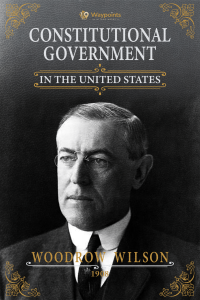
Woodrow Wilson, Constitutional Government (1908)
Woodrow Wilson
1908
Long before entering the White House, Woodrow Wilson argued that American government had evolved beyond the system envisioned by the Founders. Questioning rigid separation of powers and emphasizing energetic political leadership, he examined how constitutional government should adapt to modern conditions—offering a revealing Progressive Era challenge to traditional understandings of America’s constitutional structure.
💡 KEY IDEAS IN THIS DOCUMENT
Woodrow Wilson, “Leaders of Men” (1890)
Primary Source Author • 1787–1788
Woodrow Wilson, “Leaders of Men” (1890)
Primary Source Author
1787–1788
💡 KEY IDEAS IN THIS DOCUMENT
Walter Rauschenbusch, Christianizing the Social Order (1912)
Walter Rauschenbusch • 1912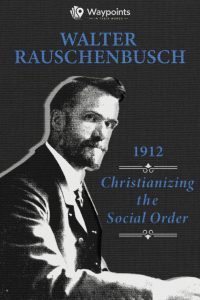
Walter Rauschenbusch, Christianizing the Social Order (1912)
Walter Rauschenbusch
1912
What would Christianity require of an industrial society marked by poverty, inequality, and concentrated economic power? Social Gospel leader Walter Rauschenbusch argued that Christian ethics must address social institutions as well as individual conduct. His work challenges readers to consider the relationship between faith, economic life, social justice, and the responsibilities of society.
💡 KEY IDEAS IN THIS DOCUMENT
Charles Merriam, A History of American Political Theories (1903)
Primary Source Author • 1787–1788Calvin Coolidge, Address on the 150th Anniversary of the Declaration of Independence (1926)
Primary Source Author • 1787–1788Frederick Jackson Turner, “The Significance of the Frontier in American History” (1893)
Primary Source Author • 1787–1788Franklin D. Roosevelt, Renomination Acceptance Speech (1936)
Primary Source Author • 1787–1788Franklin D. Roosevelt, State of the Union Address (1944)
Primary Source Author • 1787–1788Winston Churchill, Blood, Toil, Sweat, & Tears Speech (1940)
Primary Source Author • 1787–1788Winston Churchill, We Shall Fight on the Beaches Speech (1940)
Primary Source Author • 1787–1788National Security Council, NSC 68: United States Objectives and Programs for National Security (1950)
Primary Source Author • 1787–1788Dwight Eisenhower, Military-Industrial Complex Speech (1961)
Primary Source Author • 1787–1788MLK Jr., Letter from Birmingham City Jail (1963)
Primary Source Author • 1787–1788Heart of Atlanta Motel v. United States, 379 U.S. 241 (1964)
Primary Source Author • 1787–1788Lyndon Johnson, Remarks at the University of Michigan (1964)
Primary Source Author • 1787–1788George W. Bush, Address to Joint Session of Congress (2001)
Primary Source Author • 1787–1788Angelo Codevilla, “Victory: What It Will Take To Win” (2001)
Primary Source Author • 1787–1788Adam Smith, An Inquiry Into the Nature and Causes of the Wealth of Nations
Primary Source Author • 1787–1788Henry Hazlitt, Economics in One Lesson
Primary Source Author • 1787–1788Friedrich A. Hayek, The Road to Serfdom
Primary Source Author • 1787–1788Friedrich Hayek, “The Use of Knowledge in Society”
Primary Source Author • 1787–1788Leonard E. Read, “I, Pencil”
Primary Source Author • 1787–1788
Waypoints Wealth Creation Videos
Primary Source Author
1787–1788
💡 KEY IDEAS IN THIS DOCUMENT
Thomas Krannawitter, Save The Swamp
Primary Source Author • 1787–1788Thomas Krannawitter, “An Introduction to Citizenship”
Primary Source Author • 1787–1788
Brutus, No. 1 (1787)
Brutus
1787
Could a republic as large as the United States remain both free and representative? Writing as “Brutus,” an Anti-Federalist warns that the proposed Constitution would concentrate power in the national government, weaken the states, and endanger liberty. His opening essay frames fundamental questions about federalism, representation, and the dangers of centralized power.
💡 KEY IDEAS IN THIS DOCUMENT
📁 WHY IT MATTERS FOR AP GOV
Essential primary source for understanding the republican government, the union of the states, separation of powers, federalism, and the arguments for ratification.