Natural Rights

Natural rights are rightful claims that exist by nature.

Natural Rights

Wave Image

Rights belong to individual human beings, not groups of people based on skin color, class, sex, sexual preferences, or any other group characteristic.

A right is a rightful claim. If you have a rightful claim to something—such as your property, or your liberty—then you have a right to that thing. The idea of individual rights is rooted in what the American Founders called “natural rights,” which are rights—and rightful claims—that exist by nature.

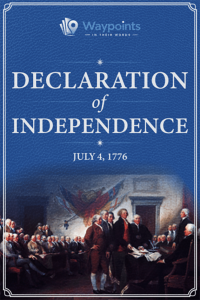
Simply by virtue of human nature, every human being possesses a right (and has a rightful claim) to one’s own life, liberty, and the pursuit of happiness, as the Declaration of Independence reminds us.

Every human being possesses these rights by nature, which is to say they are natural rights.

– Natural rights don’t come from government or laws. If government or the laws a government creates and enforces violate the natural rights of citizens, then the government and its laws are wrong, unjust. We judge governments by the standard of natural rights, not vice versa.

– Every individual human being has equal natural rights because every individual human being has a natural, rightful claim to his own body, mind, life, liberty, labor, property, and the free pursuit of happiness, including the freedom of speech and religious liberty. Individual natural rights do not vary according to a person’s skin color, genitalia, gender identification, or sexual preferences. The natural rights of each individual human being are the same as the natural rights of all other human beings precisely because they are natural, and all human beings share the same human nature.

– The very concept of equal protection of the laws for the equal individual rights of each and every citizen is rooted in the idea of equal natural rights, itself rooted in human nature—which is universal and timeless. All human beings, everywhere, have the same human nature, regardless of what they look like or what language they speak.

Individual natural rights are also unalienable. In the context of the Declaration of Independence, unalienable refers to rights that are inherent and cannot be taken away—or transferred from one person to another—because they are derived from the very nature of being human.

Someone might steal your wallet or purse, for example, yet you still have a rightful claim to your wallet/purse after it has been taken. That is why theft is wrong, and why it is right to return something that has been stolen.

Stealing property from an individual is wrong. Stealing a person’s natural right to his own property is impossible. Stealing someone else’s life—i.e. murder—is wrong. Stealing someone’s natural right to life is impossible.

The natural rights of an individual can be violated, but no one can take away natural rights. Your natural rights, as a human being, cannot be alienated from you. They are unalienable. Unalienable natural rights are why moral wrongs are wrong.
    • Thomas Jefferson, First Inaugural Address (1801)

    Thomas Jefferson, First Inaugural Address (1801)

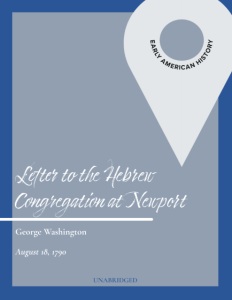
    • George Washington, Letter to the Hebrew Congregation at Newport

    George Washington, Letter to the Hebrew Congregation at Newport

    • James Madison, “Property”

    James Madison, “Property”

    • Northwest Ordinance

    Northwest Ordinance

FAQ

Waves

No. Waypoints is not a lesson-plan warehouse. It is a curated library of primary sources paired with tutorials that deepen content knowledge and strengthen instruction. There are no student-facing lesson-plans; there are tutorials for teachers. For teachers, Waypoints is more like graduate school than a set of prepared lesson plans.
The Home Plan is ideal for individual learners and homeschooling families.

Organizer and Educator accounts can access the tutorials. Student accounts cannot.

Waypoints is a digital platform for learning and teaching built around beautifully published Primary Source Documents and Teacher Tutorials that reinforce selected Key Ideas of Liberty.

The Home Plan is $199 per year and includes an Organizer account, up to two Educator accounts, and up to four Student accounts.

Yes. Many people use the Home Plan simply for their own access to the Library and Tutorials. If you are a lifelong learner, the Home Plan is for you.

No. The purchase process automatically creates your Organizer account, which includes full access to all Waypoints content.

A Custom Plan is for schools, organizations, or other users whose needs are not fully met by a Home Plan or an Academy Plan. It can include a tailored combination of Educator and Student accounts. Please contact us for a Custom Plan proposal.

Student accounts can access the Library of primary source documents.

Yes, please do! We encourage teachers to use Tutorial content, written or video, any way they find helpful.

The Academy Plan is designed for schools, school districts, and other educational organizations.

For schools and districts, pricing is based on student enrollment. For non-school organizations and businesses, pricing is based on membership or staff size.

Please use the Contact Us page to discuss pricing, onboarding, and implementation.

Educators receive tutorials that illuminate the documents, deepen subject-matter knowledge, and support stronger classroom instruction.

You can go to the Waypoints Library and see the list of titles we have curated stretching across subjects such as American history, political thought, philosophy, economics, and citizenship.

Not yet. Additional titles are being prepared and published on a rolling basis. We will let members know when as more documents are published and uploaded to the Library.

Yes. Waypoints is designed to enrich and elevate existing instruction, especially in history, civics, government, and related courses. A teacher does not need to abandon the textbooks, lesson plans, or other curricula materials that have been used for past instruction. Waypoints is designed as an add-on to the materials teachers have been using and assigning to students.