Designed for High School Study at Home
You can teach serious ideas at home — and you do not have to do it alone.
As homeschooling parents, you have an unusual opportunity and an enormous responsibility: to decide what your children will study, which books and ideas they will encounter, and how seriously they will be asked to think.
Waypoints helps families bring important primary sources into a homeschooling setting with confidence. Parents receive serious written and video tutorials that help them prepare; students encounter the historic documents themselves.



Free Trial: Two weeks. No credit card. Nothing to cancel.

Serious help for parent educators
Historical context, close textual analysis, major arguments, key passages, discussion questions, writing assignments, suggested lessons, and video tutorials.
Give your children direct access to original works in American history, government, moral and political philosophy, economics, and related fields.
Use one document, one unit, a suggested course of study, or a broader sequence alongside the homeschool materials you already value.
Prepare yourself to teach—and deepen your own understanding while helping your children grow as readers, students, and citizens.

Core Proposition
You do not have to know everything already. We are here to help you help your children.
Taken Responsibility
You Have Taken Responsibility for Your Child’s Education
For many parents, choosing to homeschool is a major decision made only after long reflection. Then another realization arrives: you are now responsible for helping your children learn across a remarkable range of subjects.
That responsibility can feel exhilarating—and sometimes overwhelming. You may know exactly what you want your children to learn, yet still wonder whether you are prepared to teach demanding subjects such as the American Founding, constitutional government, slavery and abolition, political philosophy, economics, or the arguments in documents such as The Federalist Papers, Washington’s speeches, Dred Scott, or the Lincoln-Douglas debates.
Waypoints exists to help. We cannot teach every subject your child needs. But in the areas we cover, we can help you prepare, understand difficult texts, ask better questions, and bring serious primary sources into your homeschool with greater confidence.
Right Preparation
You Can Teach Serious Ideas at Home
No Ph.D. is required. The Waypoints tutorials are designed to help parent-educators study a document before asking a student to wrestle with it.
Historical Context
Understand the author, audience, controversy, purpose, and circumstances surrounding a document.
Identify central claims, reasoning, principles, and questions at stake.
Work carefully through difficult passages, unfamiliar language, and important distinctions.
Key Passages
Find the sentences and sections most worth slowing down to read, discuss, and revisit.
Discussion & Writing
Use questions, short writing assignments, and suggested lessons to turn study into conversation and reflection.
Video Tutorials
Study difficult documents with additional explanation and interpretation much as you might in an advanced seminar.

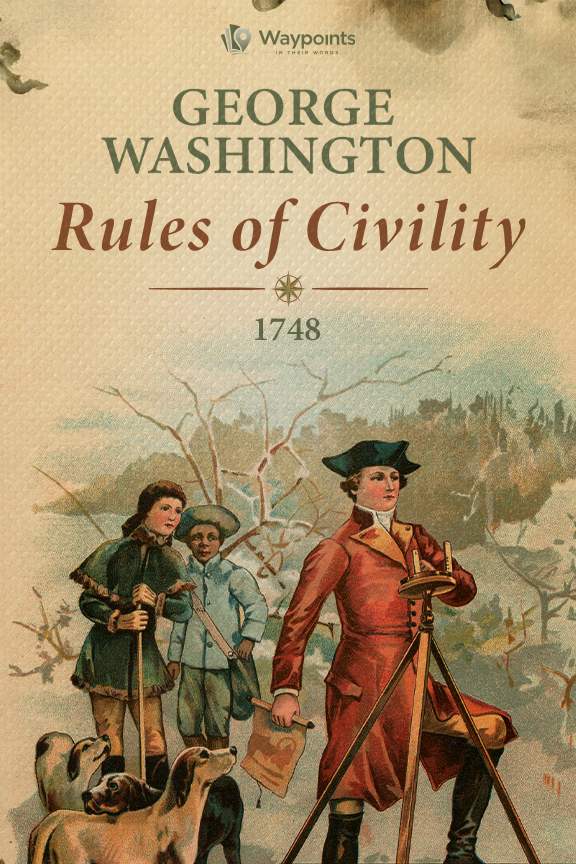
George Washington’s Rules of Civility
CHOOSE
Choose one primary source that fits something you are already teaching — or something you have always wanted to study together.
PREPARE
Study the Waypoints tutorials. 20 minutes leaves you prepared, not performing.
READ
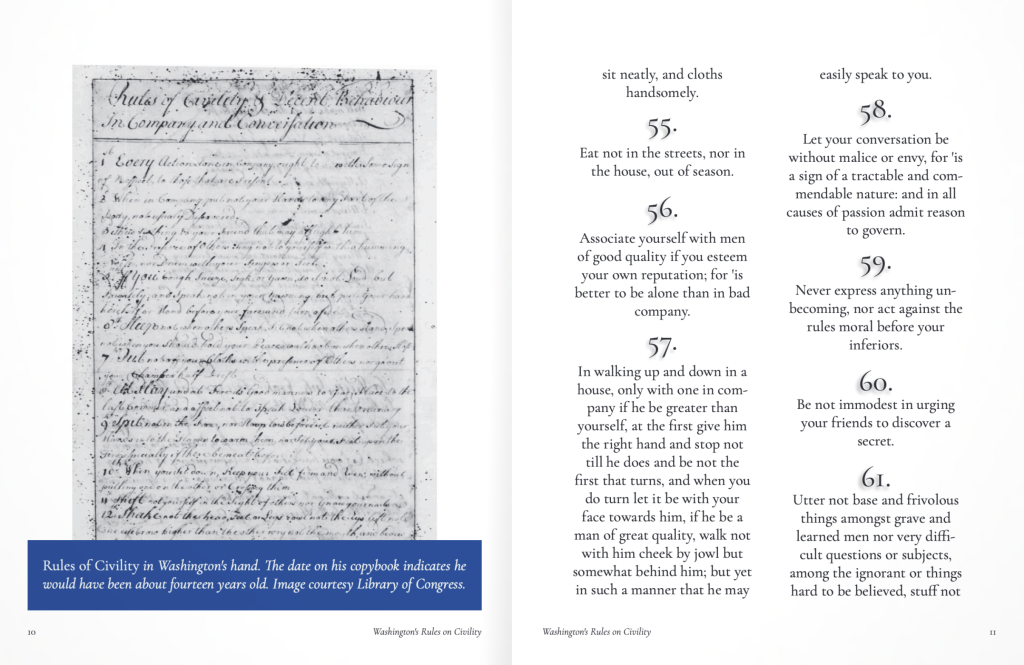
Have your child read the published primary source directly at the table and discuss. No textbook filter. Read the rules Washington copied by hand as a young man.
✓
Parent – Studies the document, context, arguments, key passages, and related teaching resources.
✓
Student – Reads the published primary source and engages the author’s words directly.
✓
Family Discussion – Conversation begins from the text, with the parent better prepared to guide serious questions rather than merely provide answers.
sources themselves
Go to the Sources Themselves
Homeschooling gives families unusual freedom to choose what their children read. Waypoints encourages families to use that freedom to return to the great documents themselves.
Instead of learning Jefferson only through a textbook summary, read Jefferson. Instead of learning Madison only through a commentator, read Madison. Instead of reducing Lincoln, Douglass, Washington, Locke, Aristotle, or Smith to a few quotations, encounter their arguments in full context.
IN THEIR WORDS
Primary sources allow students to see how important thinkers reasoned, what distinctions they made, what evidence they offered, and what questions they believed mattered.
A civic education built around insightful questions
✓
Liberty & Equality – What do these principles mean, and how are they connected?
Rights & Consent – What makes political authority legitimate?
Constitutional Government – How should political power be divided, limited, and exercised?
Citizenship & Self-Government – What does responsible self-government require from citizens?
Slavery & Abolition – How did the principles and practices of American political life come into conflict?
Moral & Political Philosophy – What are justice, virtue, human flourishing, and the good life—and what do those questions have to do with politics?
✓
Political Economy – What is the relationship among property, exchange, prosperity, law, freedom, and citizenship?
✓
The Great Conversation – Place American documents within a much longer conversation about the most fundamental human question: How should I live?
Secondary interpretations of great historic texts are just that: secondary. Encourage your child to begin forming his or her own interpretations through close study—a habit made easier when parents model careful reading after preparing with Waypoints.

Your Children
Learn Alongside Your Children
Waypoints is not only a resource for what your children will learn. Parent-educators often discover that preparing to teach these materials becomes an education for themselves as well.
You may begin by opening a tutorial because you want to explain a document to your son or daughter. Along the way, you may find yourself seeing the text differently, recognizing new connections, or revisiting questions you have not considered seriously in years.
HELP YOUR CHILDREN LEARN
Give them direct access to important texts and serious questions.
PREPARE YOURSELF TO TEACH
Use tutorials to build the background and confidence needed to guide discussion.
LEARN ALONGSIDE THEM
Treat homeschooling as an opportunity for the intellectual growth of the whole family.

Great books reward returning readers
A great text is not a disposable assignment. Aristotle’s Ethics, The Federalist Papers, Washington’s great speeches, Lincoln’s writings, and other enduring works reward repeated study.
Return to them with greater experience, better questions, and deeper knowledge, and you are likely to discover arguments, distinctions, and insights you did not notice before—or had simply forgotten.
Something else happens as you read more widely: the great texts begin to illuminate one another.
Aristotle, for example, can help make George Washington more intelligible. Washington’s First Inaugural Address connects virtue, happiness, morality, and republican government in ways that become clearer when read in light of Aristotle’s account of virtue and human flourishing.
At the same time, Washington can help make Aristotle more intelligible. Aristotle’s description of the magnanimous—or great-souled—person is necessarily abstract. Studying Washington’s character, actions, and words gives us something closer to a living example of what such greatness might look like in practice.
This is part of the pleasure and power of serious study. The deeper you go into one great work, the more you may begin to see in others. Over time, individual documents become part of a larger intellectual conversation—and provide a stronger foundation for understanding the questions and controversies of our own time.
Build the Education
Build the Education That Fits Your Family
Waypoints is supplemental by design. It does not require every family to follow the same sequence, use the same curriculum, or move through material at the same pace.
Use as much—or as little—as makes sense
Consequential Primary Source
Add a consequential primary source to a history, government, literature, rhetoric, philosophy, or economics lesson.
Build Depth
Build depth around the American Founding, slavery and abolition, constitutionalism, citizenship, political economy, or another theme.
American History
Use Waypoints throughout a homeschool course in American history, government, civics, political philosophy, economics, or related subjects.
A Suggested Course of Study
Follow the recommended sequence listed in the Waypoints Library when it is helpful, while remaining free to change the order, add outside materials, or pursue another question.
CROSS SUBJECT BOUNDARIES
Use Paine, Jefferson, Lincoln, Washington, or other historical texts in history, literature, rhetoric, writing, philosophy, or interdisciplinary study.

Designed mainly for high-school-level study
Waypoints is designed primarily with high school teachers and students in mind. Many materials can also work well with strong middle-school students when a parent provides appropriate guidance and selects documents suited to the student’s reading level and interests.

No rigid scope and sequence. You choose the path.

REVISIT GREAT WORKS
Introduce a demanding book or document when a student is ready, then return to it later for deeper study.
Free Trial
✓
Two weeks
✓
Selected homeschool
materials
✓
No credit card
✓
Nothing to cancel
Home PLAN
✓
Homeschooling families &
parent-educators
✓
Up to 2 Educator and 4 Student
accounts
✓
Library + tutorials
as appropriate
You have taken responsibility for educating people you love. We can help.
Waypoints cannot replace the judgment, love, and responsibility that parents bring to homeschooling. Nor should it. What we can provide is a carefully curated collection of important primary sources and serious intellectual preparation to help you and your children study them well.
Help your children learn. Prepare yourself to teach. Learn alongside them.
FAQ
Frequently Asked Questions

What if I have already read many of the documents in the Waypoints Library?
Then you may be an especially good candidate for Waypoints.
Great books and important historical documents are rarely exhausted by one reading. Returning to Aristotle, The Federalist Papers, Washington, Lincoln, or other enduring works often reveals distinctions, arguments, and connections that were missed before—or simply forgotten.
There is a reason serious scholars spend decades—sometimes entire careers—returning to a small number of truly great texts.
Waypoints tutorials can also place familiar texts beside other documents and ideas in ways that make both more intelligible. The goal is not merely to introduce a text once, but to encourage the kind of repeated study from which deeper understanding grows.
Can Waypoints help my family connect historic documents to questions we encounter today?
Yes, although Waypoints begins with the enduring arguments rather than with the latest headline.
Serious study of liberty, equality, natural rights, consent, constitutional government, citizenship, political economy, virtue, and human nature gives families intellectual bearings from which to think about changing events and controversies.
The aim is not to tell families what to think about every current question. It is to build the historical and philosophical foundation that helps parents and students think more carefully for themselves. Thinking well is indispensable for personal and political self-government.
Can the same Waypoints document be useful at different stages of my child’s education?
Absolutely. Homeschooling makes repeated study unusually practical, and beneficial.
A younger student might first encounter a document for its apparent arguments, historical importance, or a few key passages. Years later, the same student can return to it with greater maturity and examine more difficult reasoning, deeper philosophical questions, or subtle connections to other authors and ideas.
The Federalist Papers, Aristotle’s Ethics, Washington’s speeches, Lincoln’s writings, and other great works often become more valuable—not less—as students return to them.
Can Waypoints support serious family discussion rather than simply independent reading?
Yes. Many tutorials include discussion questions, key passages, writing prompts, and suggested lessons that parents can adapt for family study.
A parent might read the tutorial first, assign the primary source to an older student, and then use one or two passages as the basis for a conversation around the table. Another family might turn a group of related documents into a longer seminar-style study.
Waypoints provides material and preparation; your family decides what kind of conversation, schedule, and level of independence work best.