
Waypoints is an educational platform built around pivotal primary sources and the ideas they contain. We help teachers, students, homeschooling families, and individual learners encounter important thinkers and statesmen in their own words—and think seriously about liberty, justice, equality, personal and political self-government, and the right way to live.
THE WHY
Primary Sources | Serious Education
Serious education requires more than the accumulation of facts. It requires understanding the ideas, arguments, choices, and controversies that shaped the world we inherited.
From that insight grew the Waypoints Library—a curated collection of pivotal primary sources in American history, political philosophy, economics, and citizenship.
But collecting documents was only the beginning. Important primary sources can be difficult. Their language may be unfamiliar, and their arguments often require historical and philosophical context. That is why Waypoints provides written and video tutorials designed to help readers understand what they are reading and why it matters.
Waypoints is supplemental by design. We do not prescribe a single curriculum or rigid sequence. We provide serious primary sources and the preparation necessary to study them well.
We are part of the human journey from the past to the present. Along the way, certain documents stand as waypoints—markers that help us understand where we have been, how we arrived where we are, and where we may be heading.
Abraham Lincoln
House Divided Speech, 1858
Pivotal documents preserve important moments in our historical and intellectual inheritance.
They let us trace arguments about liberty, justice, equality, government, citizenship, economics, and the good life across time.
By returning to these waypoints and listening carefully to those who were there, we can better understand the present and better judge what to do next.
Waypoints is grounded in an older tradition of classical and liberal education: education should equip human beings to think seriously and independently about the most important questions for the ultimate purpose of living well.
What is justice? What is liberty? What makes government legitimate? What does self-government require? What is the right way to live? These remain our questions because they are permanent human questions.
Students should examine arguments, question assumptions, weigh evidence, and distinguish truth from what is merely fashionable or familiar. The highest friendship joins friends in pursuit of the good and true.
That is why Waypoints begins with primary sources. We want students, teachers, parents, and individual learners to encounter important thinkers and statesmen in their own words.
That is why primary sources stand at the center of Waypoints.
Rather than encountering Aristotle, Locke, Jefferson, Madison, Washington, Douglass, Lincoln, Coolidge, and others primarily through summaries and textbooks, readers should have opportunities to engage what these thinkers and statesmen actually wrote or said.
The purpose is not to accept their arguments uncritically. It is to understand them accurately, consider them seriously, compare them with competing arguments, and judge them for ourselves.
“In Their Words” is more than a tagline. It describes our method.
Featured from the Waypoints Library
James Madison
Featured
“Because experience witnesseth that ecclesiastical establishments, instead of maintaining the purity and efficacy of Religion, have had a contrary operation.”
Featured
“Must I undertake to prove that the slave is a man? That point is conceded already. Nobody doubts it.”
Featured
“Every art and every inquiry, and likewise every action and choice, seems to aim at some good.”
Frédéric Bastiat
Featured
Featured
“Labor to keep alive in your breast that little spark of celestial fire called conscience.”
A curated collection of pivotal primary-source documents drawn from American history, political philosophy, economics, and citizenship, each handsomely published.
Careful guidance on historical context, arguments, major themes, important passages, connections, discussion questions, and opportunities for further study.
Accessible explanations that bring something of the depth and seriousness of a graduate seminar to difficult primary sources.
Waypoints supplements what teachers, schools, homeschooling families, and individual learners are already doing. Follow the recommended sequence listed in the Waypoints Library, build your own sequence, study a particular subject, or begin with a single document.
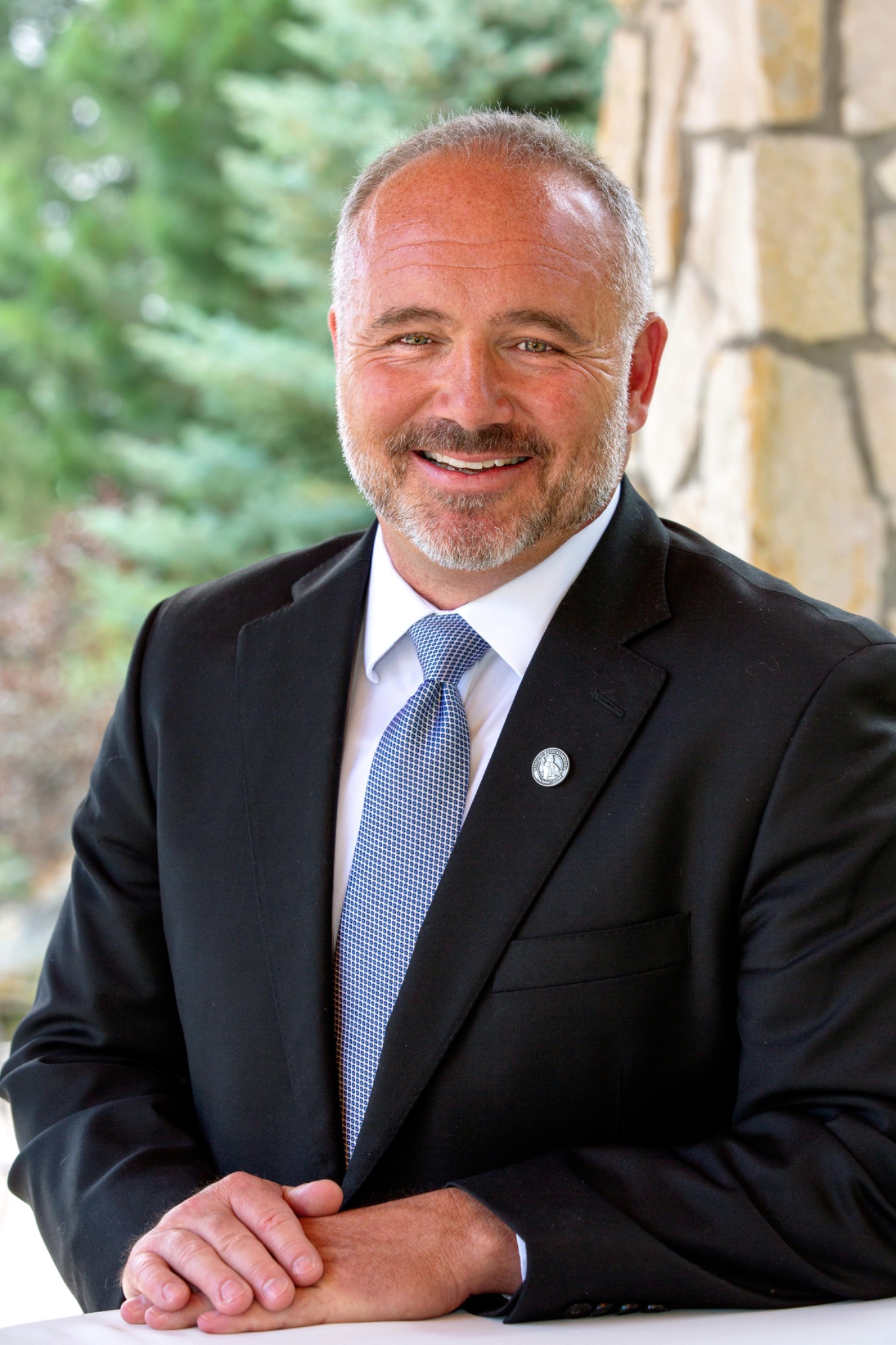
Ph.D. | Political Philosopher | Teacher
For speaking engagements, interviews, and media appearances.
Waypoints was founded by political philosopher, professor, and author Thomas L. Krannawitter.
Dr. Krannawitter holds a Ph.D. from the School of Politics & Economics at Claremont Graduate University. He has taught undergraduate and graduate courses at Claremont McKenna College, Hillsdale College, and George Mason University. He also taught high school teachers in Ashland University’s Master of Arts in American History and Government program.
For decades, he has studied and taught political philosophy, American political thought, the Constitution, Abraham Lincoln, the Civil War, and the principles of liberty and self-government.
He formerly served as Vice President of the Claremont Institute, where he helped launch The Claremont Review of Books in 2001. He has also been one of the principal instructors for the Leadership Program of the Rockies for more than twenty years.
His books include Vindicating Lincoln, Crisis of Our House Divided, and Save the Swamp. He has also contributed chapters to scholarly collections published by academic presses.
His forthcoming book, Triumph & Tragedy, examines the relationship between the Declaration’s equality principle and the American campaign to abolish slavery.
Fellowships and Academic Honors
Dr. Krannawitter has received many academic and research fellowships, including the H.B. Earhart Fellowship, whose recipients have included Friedrich Hayek, Milton Friedman, Thomas Sowell, Larry Arnn, and Ed Feulner. He has also been a Winston Churchill Society Fellow, a Henry Salvatori Fellow, a Richard Weaver Fellow, and a John M. Olin Foundation Research Fellow.
See the primary sources at the heart of Waypoints.
Learn more about the ideas of liberty, education, truth, and self-government that guide our work.
Explore selected primary sources and related tutorials for yourself.